➤ Which company has the best cancer insurance?
There is no single best company for everyone. HealthSpring offers the highest lump sum we compare, up to $100,000, and the widest issue ages. Aetna pays its full benefit for carcinoma in situ. Aflac suits people who want payments tied to treatment. The best choice depends on your age, state, budget and how you want benefits paid.
➤ What is the best cancer insurance for seniors?
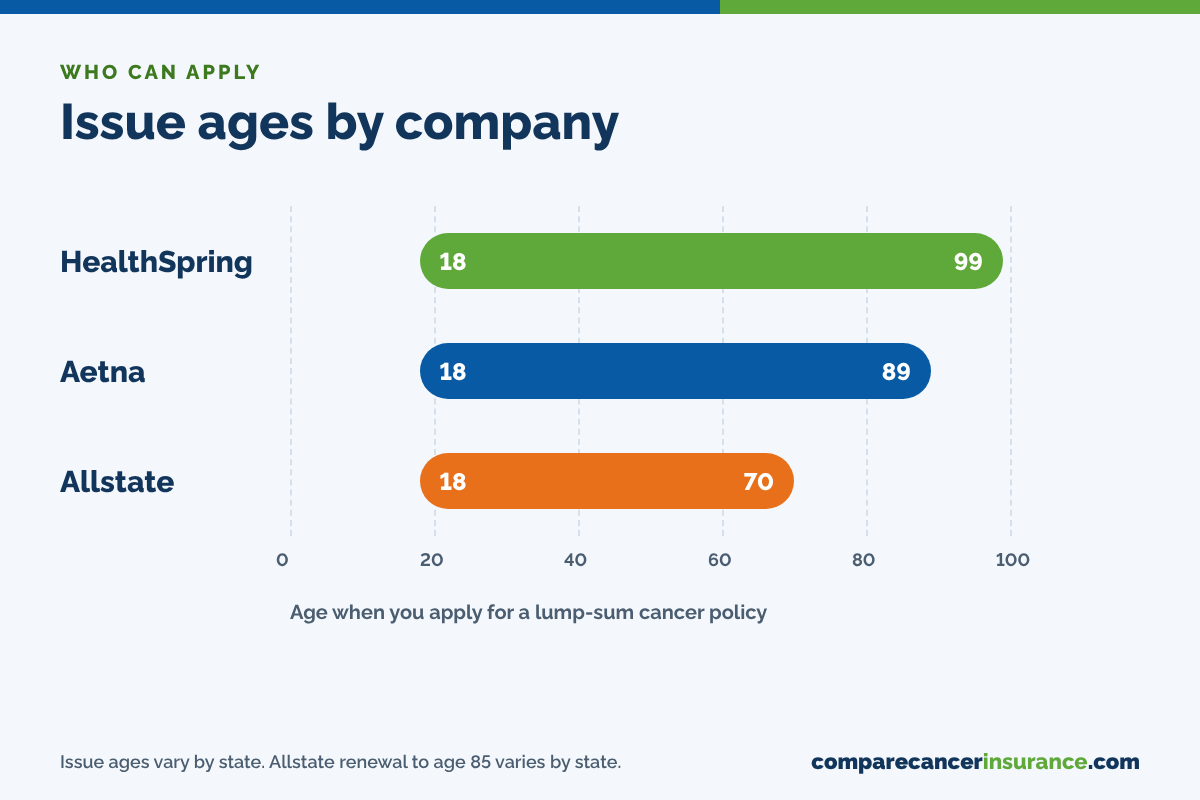
Older applicants should look first at policies with high issue ages. HealthSpring’s lump-sum policy accepts applicants up to age 99 and Aetna’s up to 89, while Allstate’s limit is 70. Cancer insurance can be paired with Original Medicare, a Medicare Supplement plan or a Medicare Advantage plan.
➤ What is the best cancer insurance for young families?
Younger buyers usually get the lowest premiums and can choose from every carrier. A lump-sum policy from Allstate, Aetna or HealthSpring with family coverage gives fast cash, and many policies let you add a spouse and children.
➤ Which cancer insurance pays the most?
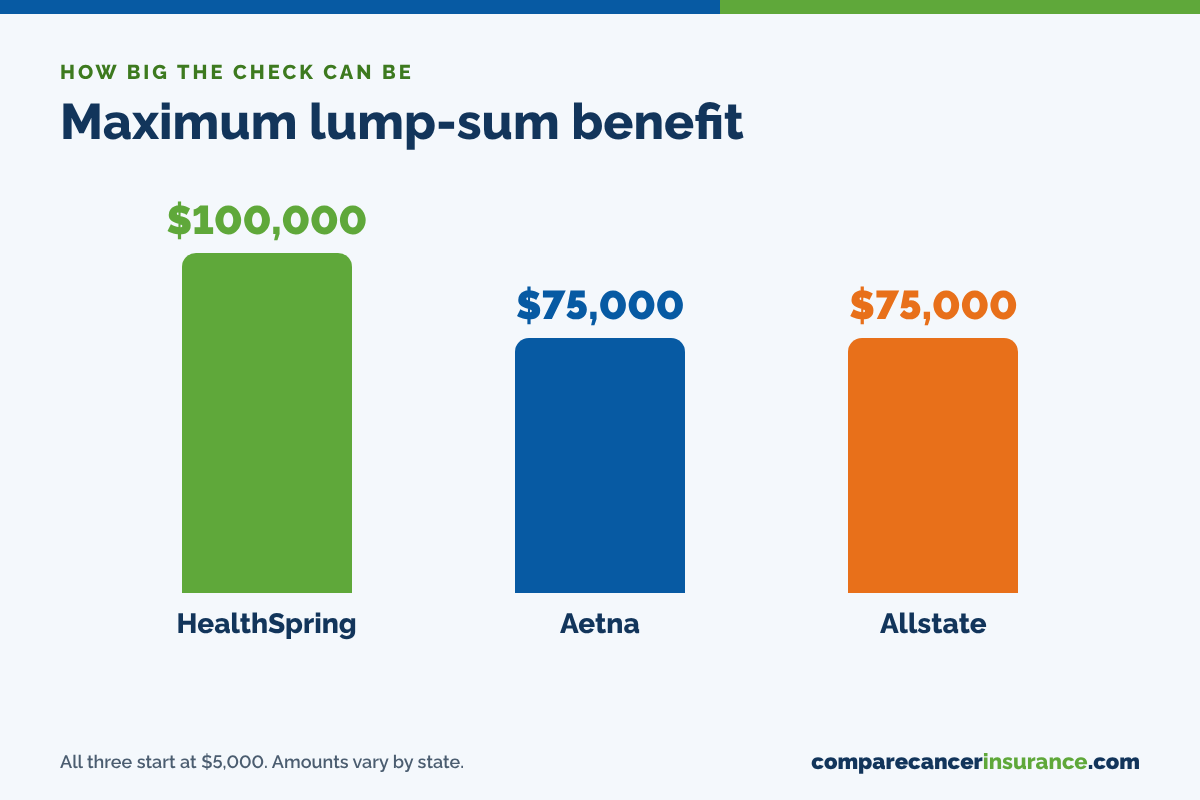
Among the policies we compare, HealthSpring’s lump-sum coverage goes up to $100,000. Aetna and Allstate go up to $75,000. A scheduled-benefit policy such as Aflac’s can pay more in total over a long treatment because it pays for each covered treatment.
➤ Is Aflac better than a lump-sum cancer policy?
Neither is better for everyone. Aflac pays set amounts as treatment happens, which can add up during long treatment. A lump-sum policy pays one larger amount at diagnosis that you can use right away for anything.
➤ Is cancer insurance available in every state?
Not every policy is sold everywhere. For example, Aetna’s cancer policy is not sold in Alaska, Hawaii, Maine, New York or Washington, D.C., and HealthSpring’s lump-sum policy is not sold in Idaho, New Mexico, New York, Virginia or Wyoming. A licensed agent can check what is available where you live.
➤ Do the best cancer policies cover recurrence?
Many offer it as an option. Aetna’s optional recurrence benefit, for example, pays a percentage of the original benefit that grows the longer you go without treatment, and HealthSpring offers a recurrence rider. Recurrence coverage usually adds to the premium.
➤ How do I know a cancer insurance company is financially strong?
Look up the company’s financial strength rating from an independent rating agency such as AM Best, and check its license and complaint history with your state insurance department. Large, established carriers are generally the safest choice for a policy you may keep for decades.